Fascia & Forces (Part 1)
Published on: 04/11/2025
Athletes are producing more force than they can manage. This article explains how fascia governs energy distribution, injury risk, and resilience in high-velocity sport.
Fasciafascia based training

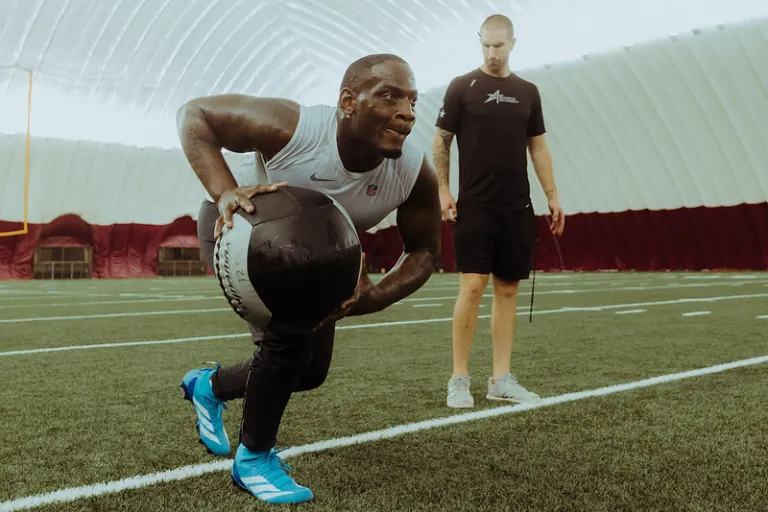
Athletes are producing more force than they can manage. This article explains how fascia governs energy distribution, injury risk, and resilience in high-velocity sport.

The myofascial lines represent the predominant kinetic pathways for which force is transmitted throughout the body. In this article, I cover this requisite anatomy, along with some key principles for adjusting training parameters to better reflect this anatomical view.

Over the last three years I’ve continued to veer further away from the conventional musculoskeletal lens and constructs of Newtonian physics while becoming more invested in the biotensegrity/fascial approach. Now, my intention isn’t to draw some proverbial line in the sand here, as if the two need to be separate. Make no mistake about it, nothing about human movement or function is performed by a singular system. In fact, literally every single thing we do requires contribution from multiple sys

Learn about the significance of the fascial slings and how to optimize these anatomical landmarks in training.

The head and neck are vital for performance, yet for some reason, are often overlooked in considerations for programming and performance preparation. In most cases, the greatest extent of “neck specific” focus we see in training is multi-directional neck isometrics in some football and combat sport settings. Beyond that? Pretty sparse.It would be a cliché understatement for me to say there’s more for us to be cognizant of, but the fact is the neck really is one of the more sophisticated- and in

The evolutions of basketball over the last decade have been transcendent, and with few exceptions have been occurred more rapidly than any other sport in recent history. As we have seen basketball shift towards a positionless model, athletes have demonstrated an incredible ability to be adaptable by expanding their skillset to meet these demands. Where for decades we saw clear delineation between Centers/Forwards/Guards, and specific body types to meet those positional requirements, we now see a